

Clean Air Asia urges local cities to bridge their learnings on climate-sensitive urban development to institutional ownership
When a project ends, what comes next?
As the Urban-Act Project comes to a close, Clean Air Asia encouraged the pilot cities of Antipolo, Bacolod and Tagbilaran in the Philippines to ensure that the outcomes achieved throughout the project would be reflected not only on their planning and implementation processes, but also towards institutional ownership.
“Over the course of Urban-Act, we have worked together to strengthen the foundations for climate-sensitive urban development. But tools and guidance only create value when they are taken up, institutionalized, and applied. And this is really what the project is about: what happens next?” said Dang Espita-Casanova, Associate Program Director of Clean Air Asia, during the National Policy Dialogue conducted in September 2026 in Quezon City, Philippines.

Since 2022, the Integrated Urban Climate Action for Low-Carbon and Resilient Cities (Urban-Act) Project has been supporting the Philippine pilot cities and relevant national institutions in strengthening their climate-sensitive urban planning and implementation. These were achieved by: (a) improving the institutional environment for climate-sensitive urban development; (b) inclusion of evidence-based and GEDSI (gender equality, disability and social inclusion)-sensitive spatial and urban planning; (c) identifying project concepts for urban climate action investments; and (d) enhancing knowledge through regional networking, exchange and learning.
Beyond institutionalization, Espita-Casanova also stressed the importance of making the planning process more inclusive, especially for groups facing systemic barriers.
“We have worked to make this planning process more inclusive, recognizing that transport and urban development decisions affect people differently, and that the people who rely most on public transport should have a voice in shaping the systems they depend on,” she added.
Creating leaders and allies from communities
Ms. Rowena Zapanta, Chief Administrator and Concurrent City Planning and Development Coordinator of Antipolo City, shared how their Sustainable Urban Mobility Plan – their city’s green transport and urban planning initiative – has expanded their inclusive stakeholder engagement by hiring renumerators from their communities.
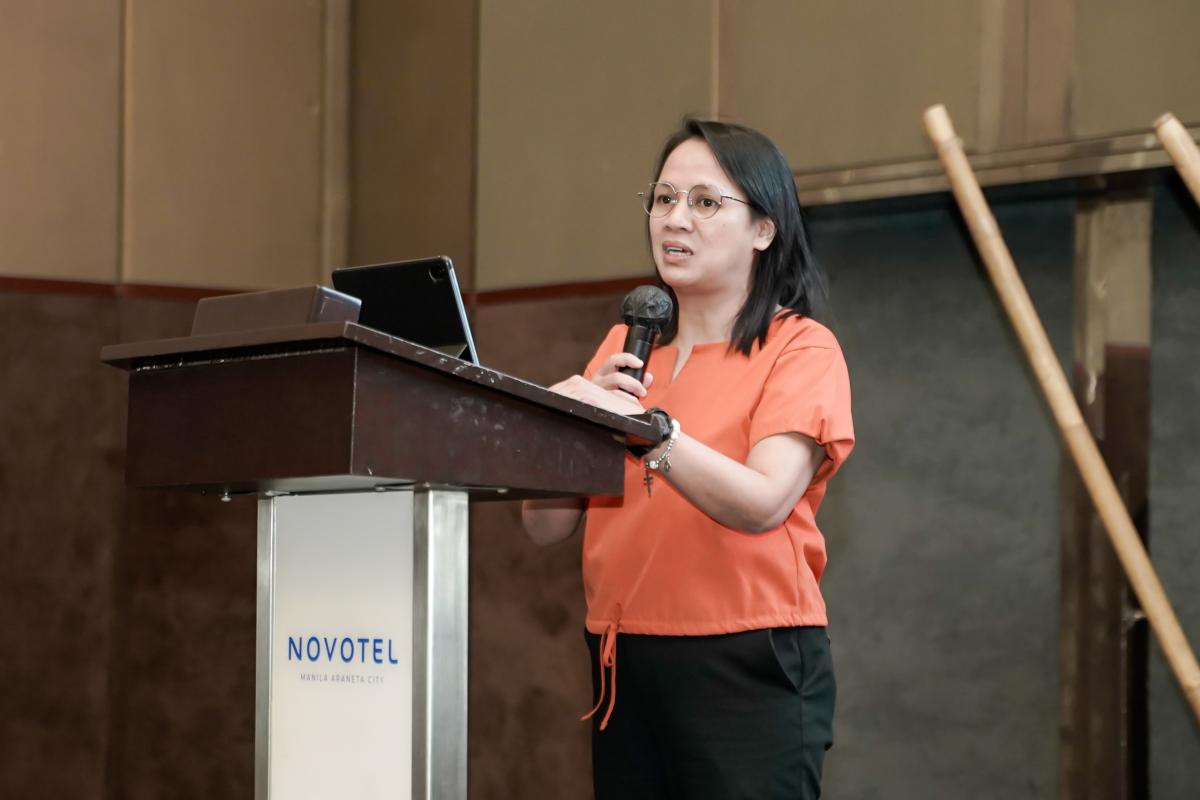
“When the government hires a renumerator, we provide them with a salary – period. But when we engage a renumerator from the community, we gained an enabling partner. One who understands the process, and one who will share the risks of schemes that need to be implemented because he or she understands that traffic or any mobility barrier is not just a problem of the government, but their problem as well,” Zapanta said.
Zapanta further emphasized that being part of the local government also means being more conscious of the ethical allocation of funds. This meant traffic lights, linear parks, bicycle lanes and playgrounds should projects that are fundamental to the needs of their constituents.
“With the Urban-Act Project, I guess one could say that the city has matured in the process. In the way we plan, in the way we utilize funds, and in how we see people not as a beneficiary of development but more of an enabling partner of the city’s development,” she said.
Institutionalizing climate-sensitive and inclusive public transport
For Bacolod City, Councilor Atty. Caesar Distrito shared how the Urban-Act Project helped their policies to be more climate-sensitive and inclusive. He shared the recently approved Bacolod City Electric Vehicle and E-Mobility Promotion Ordinance of 2026, which provides a local framework for encouraging their city’s transition towards electric and more sustainable forms of transportation.
He stressed how the policy simply does not aim to replace one type of vehicle to another, but to gradually build a more sustainable transportation system while recognizing the realities being faced by their drivers and operators.
Atty. Distrito also added the approval of the Bacolod Climate Resilience and Emergency Preparedness Ordinance of 2026, which takes a broader approach by institutionalizing proactive, science-based and community-centered climate adaptation, disaster risk reduction and emergency preparedness.

“Our Urban-Act experience therefore has given Bacolod something very important: a bridge between technical studies and actual local policy. So as Urban-Act approaches the conclusion of this phase of the project, our challenge is to make sure that the knowledge, tools and partnerships developed here do not end with the project. Because for Bacolod, our next step is institutionalization,” he said.
From climate awareness to climate-ready planning
For Tagbilaran City, City Planning and Development Coordinator Estella Margate outlined the gaps in their planning process before the Urban-Act Project, which included seeing climate work strictly for the City Disaster Risk Reduction and Management Office instead of a shared work across all offices; lack of GEDSI integration in their plans and programs; transport plans focusing solely on ridership and road flow without a climate risk lens; and lack of air quality monitoring equipment.

Now with the interventions from the project, the city was able to develop a climate-sensitive and GEDSI-inclusive Comprehensive Development Plan, Local Climate Change Action Plan, and Executive Strategic Directions (2026 – 2028). They have also integrated the findings from the Climate Risk and Vulnerability Assessment into their Local Public Transport Route Plan, and with Clean Air Asia’s help, established an air quality monitoring system within the city.
The event also featured the official turnover of the Urban-Act Project’s knowledge products of climate-sensitive public transport to national government partners, specifically the Department of Interior and Local Government, Department of Transportation, Department of Human Settlements and Urban Development, and the Land Transportation Franchising and Regulatory Board.
Four years of strong collaboration with national institutions and local government partners has proven what inclusive stakeholder engagement and integration of climate-sensitive planning can do to urban development.
“We are not here to say goodbye to the work. We are here to make sure that the work outlasts the project.
